


Classroom Slides & Student Handouts
Guidelines for Adapting Worksheets or Slides:
-
Attribution: If you adapted a worksheet, add "Adapted from" to the @bitescizededucation on the footer.
-
Slides: If you change the style of the slides, keep the Bite Scized Education logo in the top corner or add to all slides "adapted from @bitescizededucation" at the bottom.
-
-
Logos: Please keep our logos on all documents.
-
Sharing: These resources should not be shared with teachers who have not purchased these lessons or participated in our professional development sessions. If you have an interested colleague, reach out to us @bitescizededucation@gmail.com.
-
Support: If you have any issues accessing the folder, please reach out to us at bitescizededucation@gmail.com for assistance.


Simulations for this Lesson

Modeling Smell

Equilibrium

Nitrogen in Soil

Tea and Temperature
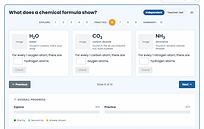
Acids Exploration (Preview)

Greenhouse Gases

Balancing Chemical Reactions

Soil Savings Game

Landfill Data Investigation

Table Salt Composition

Salt around the World

Ions and Charges

Chlorine & Electronegativity

Mixing & Polarity

Flavor Compounds in Vanilla

Tea and Energy

Maple Syrup Video

Sodium in Water Video
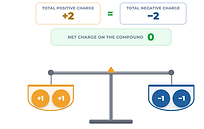
Ionic Compounds Builder

Types of Fuel

Ammonia & Stoichiometry

Exploring Cacao

Desalination Model

Radioactivity

Genes

Shade Scale Tool

Elements & Chemical Formulas

Ionization Energy

Electrolyte Drink Analysis

Periodic Table (Charges, Valence Electrons)

Particles and pH

Vanilla & Gas Chromatograms

Heating a Liquid

Exploring Cheeses

Exploring Gases

Passing Down Genes

Umami & MSG (Video)

Comparing Gases & Liquids

Ocean Acidification

Energy and Fuels

Cathode Ray Experiment
Chemical Formulas

Anthocyanins & Equilibrium

Salt Composition Analysis

Sodium in Nature

Periodic Table Trends

Exploring Bond Types

Acids in Water

Water's Heating Curve
Exploring Steaming

Molecules in Milk

Covalent Bonds

Punnett Squares

Methane Cycle

Conduction in Solids Instructional Video

Salt and Ice Investigation

Lewis Structures

How is Tea Made?

Ratios in Chemical Reactions
Compounds in Food

Elements & Compounds

Comparing Atoms and Ions

Ingredients in Electrolyte Drinks

Salts Dissolving in Water

Observe: Vanilla Products

Tea around the World

Exploring Syrups

Magnesium and HCl
Simulations are available when lessons are purchased in units or longer sequences.
You must be logged in to access these simulations. Create a general student account for students to access simulations and resources here.
Summary of Updates
V3 Updates
● Grew from 7 to 9 lessons; old numbers shifted
● Two new chemical-formula lessons (1.6, 1.8)
● Density Lab (1.3) reframed and moved later
● Exit Tickets built in; 1.9 expanded (Cherry Cola Distillation, Dead Sea Lab Practical)
V3 Updates
● New lessons include:
1.6 — What is table salt made of and why?
1.8 — Why does a chemical formula matter?
Both focus on chemical formulas, which the old unit barely touched.
● Lesson numbers shifted- Old lesson numbers may no longer point to the same content.
Key conceptual changes
● Concentration/Density Lab (new 1.3): reframed so the lab drives the question — students measure density and use it as evidence that salt is present even when they can't see it. The activity has been simplified a bit from last year, and the lesson sits later in the sequence so students build up basic lab skills and math/graphing first.
● Evaporation (new 1.4): sharpened around three connected ideas — temperature, states of matter, and particle models.
● Chemical formulas (new 1.6 & 1.8): a new two-lesson arc — first NaCl's 1:1 ratio, then subscripts and non-1:1 ratios (H₂O vs H₂O₂).
● Exit Tickets are now built in: quick formative checks at key points (Density and Concentration, Representing Gas/Liquid/Solid, Chemical Formulas)
● Assessment (1.9) is expanded: now includes a distillation application (Cherry Cola Distillation) and a Lab Practical ("What is the concentration of the Dead Sea?") where students apply the density/concentration method to a real sample.
● New investigations & activities: a Desalination warm-up (1.5), and in the new chemical-formula lessons, hands-on investigations — Ice Melt (calcium chloride vs. sodium chloride) and Hydrogen Peroxide vs. Water (1.8). Modeling is also now an explicit, tracked sequence — Model 1 in 1.2 and Model 2 in 1.4 — rather than scattered steps across lessons.