


Classroom Slides & Student Handouts
Guidelines for Adapting Worksheets or Slides:
-
Attribution: If you adapted a worksheet, add "Adapted from" to the @bitescizededucation on the footer.
-
Slides: If you change the style of the slides, keep the Bite Scized Education logo in the top corner or add to all slides "adapted from @bitescizededucation" at the bottom.
-
-
Logos: Please keep our logos on all documents.
-
Sharing: These resources should not be shared with teachers who have not purchased these lessons or participated in our professional development sessions. If you have an interested colleague, reach out to us @bitescizededucation@gmail.com.
-
Support: If you have any issues accessing the folder, please reach out to us at bitescizededucation@gmail.com for assistance.


Simulations for this Lesson

Modeling Smell

Equilibrium

Methane Cycle

Conduction in Solids Instructional Video

Salt and Ice Investigation

Lewis Structures
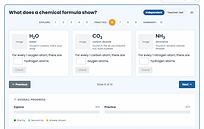
Chemical Formulas

Compounds in Food

Elements & Compounds

Comparing Atoms and Ions

Ingredients in Electrolyte Drinks

Salts Dissolving in Water

Observe: Vanilla Products

Tea around the World

Exploring Syrups

Magnesium and HCl

Sodium in Water Video
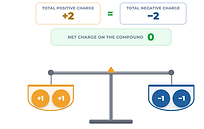
Ionic Compounds Builder

Tea and Temperature

White Powders Investigation

Greenhouse Gases

Balancing Chemical Reactions

Ratios in Chemical Reactions

Table Salt Composition

Salt around the World

Ions and Charges

Chlorine & Electronegativity

Mixing & Polarity

Flavor Compounds in Vanilla

Tea and Energy

Maple Syrup Video

Exploring Gases

Types of Fuel

Ammonia & Stoichiometry
Acids Exploration (Preview)

Desalination Model

Cathode Ray Experiment

Landfill Data Investigation
Elements & Chemical Formulas

Ionization Energy

Electrolyte Drink Analysis

Periodic Table (Charges, Valence Electrons)

Particles and pH

Vanilla & Gas Chromatograms

Heating a Liquid

Exploring Cheeses

Covalent Bonds

Umami & MSG (Video)

Comparing Gases & Liquids

Exploring Cacao

Energy and Fuels

How is Tea Made?

Anthocyanins & Equilibrium

Salt Composition Analysis

Sodium in Nature

Periodic Table Trends

Exploring Bond Types

Acids in Water

Water's Heating Curve
Exploring Steaming

Molecules in Milk
Simulations are available when lessons are purchased in units or longer sequences.
You must be logged in to access these simulations. Create a general student account for students to access simulations and resources here.
Summary of Updates
V2 Updates:
● Nuun Tablet Phenomenon: adjustments + more time on modeling
● Lesson 1.2 "Putting the Pieces Together: Ions" — small group work + peer-to-peer emphasis
● Lesson 1.3: more scaffolding for ionic compound ratios (builds on Salt)
● Lesson 1.4: more scaffolding/practice modeling dissolution; Polyatomic Ions + Puzzle Piece adjustments
New Interactives:
● Practice building ionic compounds and ratios (used across lessons)
V2 Updates:
- Nuun Tablet Phenomenon- Adjustments + Additional Time Spent on Model
- Small adjustments to "Putting the Pieces Toghetr: Ions" in Lesson 1.2 (emphasis on small group work + peer to peer instruction)
- Lesson 1.3- Bigger adjustments to making sense of ratios in ionic compounds- more scaffolding/support to first make sense of ratio before adding in elements. Build on ideas on ratios from salt.
- Lesson 1.4- Adjustments to Polyatomic Ions and Puzzle Piece Models to Add in more scaffolding and practice modeling dissolution multiple times
New Interactives
- New interactive to practice building different ionic compounds and make sense of ratio (used in multiple lessons)