


Tea: States of Matter, Temperature and Particle Models

Teacher Page
Links
This is a required assessment for the Science & Cooking for Educators Program.
No Google Drive resources are available at this time. Questions? Reach out to us.
New to our resources?
This Quick Orientation Guide will help you navigate them easily.
A student-facing page for this lesson is not currently available but will be in the future.
Overview
time:
7
-
10
class periods
standards:
MS-PS1-1*, MS-PS1-3, MS-PS1-4, MS-LS1-8
science concepts:
heat and energy, states of matter, particle models
Summary
Unpack the process of making tea by modeling particle behavior in different states of matter, temperatures, and mixtures, exploring how tea is made, and investigating why we smell things.
This lesson was recently updated.
Update Date:
November 2025
Summary of Updates
Updates in November 2025:
● Heavier emphasis on temperature- temperature investigation lab moved to lesson 1.3 (not 1.5) and temperature discussed more in smell lessons
● Heavier emphasis on gases/states of matter in smell lesson (introduction gases)
● 2 new simulations to help model and visualize smell particles
Updates in March 2025:
● Heavier emphasis on introduction to particle models; centered around explaining what happens when sugar dissolves (Lesson 1.1)
● Heavily modified Lesson 1.3 (What is smell?)
Additional Updates in May 2025:
● New: Lesson 1.6 (What’s the best way to keep our tea hot?)- added to meet standards
● Light updates to reading on smell to better emphasize concept of mixtures
Updates in November 2025:
● Heavier emphasis on temperature- temperature investigation lab moved to lesson 1.3 (not 1.5) and temperature discussed more in smell lessons
● Heavier emphasis on gases/states of matter in smell lesson (introduction gases)
● 2 new simulations to help model and visualize smell particles
Updates in March 2025:
● Heavier emphasis on introduction to particle models; centered around explaining what happens when sugar dissolves (Lesson 1.1)- Use to assess student understanding of particles, particle models, and matter. Also provides easy ways to introduce CERs.
● Heavily modified Lesson 1.3 (What is smell?): Added in
Additional Updates in May 2025:
● New: Lesson 1.6 (What’s the best way to keep our tea hot?)- Students explore how different materials transfer heat and explore porous materials. They also look at 2 simulations that show the transfer of energy through collisions. Activities based on Open Sci Ed alignment and meeting standards from Open Sci Ed Unit 6.2 Thermal Energy.
Classroom Slides & Student Handouts
Guidelines for Adapting Worksheets or Slides:
-
Attribution: If you adapted a worksheet, add "Adapted from" to the @bitescizededucation on the footer.
-
Slides: If you change the style of the slides, keep the Bite Scized Education logo in the top corner or add to all slides "adapted from @bitescizededucation" at the bottom.
-
-
Logos: Please keep our logos on all documents.
-
Sharing: These resources should not be shared with teachers who have not purchased these lessons or participated in our professional development sessions. If you have an interested colleague, reach out to us @bitescizededucation@gmail.com.
-
Support: If you have any issues accessing the folder, please reach out to us at bitescizededucation@gmail.com for assistance.


Simulations for this Lesson
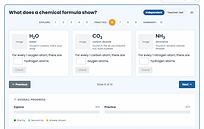
Acids Exploration (Preview)

Tea and Temperature

Modeling Smell

How is Tea Made?
Simulations are available when lessons are purchased in units or longer sequences.
You must be logged in to access these simulations. Create a general student account for students to access simulations and resources here.
New Lesson Plan Format Available!
We've moved away from the long scrolling doc! The new format is designed to be easier to navigate—key info stays accessible but out of your way until you need it.
What's new:
-
Toggle sections open/close so you see the big picture first, details when you need them
-
Easily jump around from lesson to lesson
-
Filter activities by type to plan your week at a glance
-
Unit overview and NGSS alignment tucked away, but just a click away
- Consolidated shopping list for easier planning and easier navigation to lab prep information
Exit out of this box to stick with the old format.
No additional documents are available at this time.
If you believe this is an error, reach out to us.
If you're experiencing difficulties with a document uploading, try switching to a different tab and then returning the tab or refreshing the page.